Why Your Cigar Tastes Different Every Time You Light Up (And What You Can Do About It)
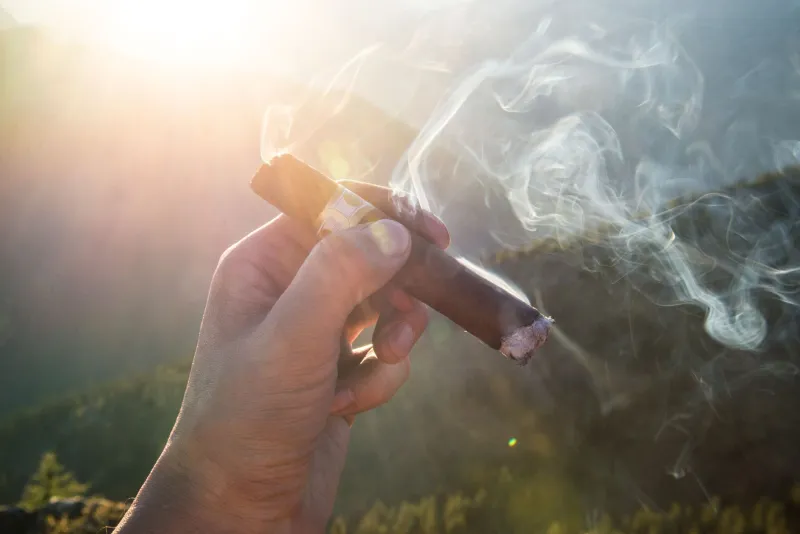
You've been there. You grab a stick from your humidor — one you've smoked before, one you know — and something's just off. The draw is tight, the flavor is flat, or the burn goes sideways before you're halfway through. Nothing changed on your end, or so you think.
Here's the thing: everything changed. The environment around you changed. And if you've been ignoring the physics of how a cigar actually burns, you've been leaving a serious chunk of your experience on the table.
Let's break it down.
Smoke Is a Physical Event, Not Just a Flavor
When you light a cigar, you're triggering a complex combustion process. The tobacco leaf burns, releasing hundreds of chemical compounds — aldehydes, pyrazines, fatty acids, and more — that combine in the smoke column and travel to your palate. What you taste isn't just the tobacco. It's the tobacco reacting to the air, the temperature, and the moisture around it in real time.
That smoke column is sensitive. Change the air temperature by 15 degrees, and the volatility of those aromatic compounds shifts. Change the humidity, and the way tobacco burns changes too. These aren't minor tweaks — they're the difference between a nuanced, complex smoke and something that tastes like you're chewing on a cardboard box.
Temperature: The Underrated Variable
Most cigar enthusiasts obsess over humidor humidity and forget about temperature entirely. Big mistake.
The sweet spot for smoking a cigar is generally between 65°F and 75°F. In that range, the tobacco combusts evenly and the aromatic compounds release at a rate your palate can actually process. Go much colder — say, you're outside in Chicago in February — and the combustion slows, the draw tightens, and the flavor profile compresses. Everything tastes duller because those volatile compounds aren't releasing the way they should.
On the flip side, smoking in high heat — think a rooftop in Phoenix in August — accelerates the burn. The cigar smokes hot, which can introduce harshness and bitterness. You're essentially outrunning the flavor.
Practical fix: If you're smoking outdoors in cold weather, give your cigar a few extra minutes to warm up before lighting. Keep it in your shirt pocket or hold it in your hand. If you're in the heat, slow down your draw and let the cherry cool between puffs.
Humidity: It Affects More Than Your Storage
You already know that cigars need to be stored at around 65-70% relative humidity. But ambient humidity — the moisture level in the air where you're actually smoking — matters just as much.
In very dry conditions, like the arid climates of Nevada, Arizona, or the high plains of Colorado, the draw on a properly humidified cigar can still feel tight. The dry air pulls moisture from the wrapper faster than you'd expect, causing it to contract slightly and restrict airflow. You'll also notice that the burn line runs hotter and less evenly.
In high-humidity environments — coastal cities like Miami, New Orleans, or Houston in summer — the opposite problem can emerge. The air is already saturated, which slows evaporation from the cigar itself. If your stick was stored at the higher end of acceptable humidity, it may smoke heavy and sluggish, producing thick, wet smoke that mutes the finer notes of the blend.
Practical fix: If you live in a dry climate, consider bumping your storage humidity up slightly — closer to 68-70% — to compensate for what you'll lose in the ambient air. In humid regions, err toward the lower end of the range, around 62-65%, so your cigars aren't already waterlogged before they hit the outdoor air.
Altitude: The Variable Nobody Talks About
If you've ever smoked a cigar in Denver, Santa Fe, or anywhere else above 5,000 feet, you may have noticed the burn runs noticeably faster and hotter. That's not a coincidence.
At higher altitudes, the air is thinner. There's less atmospheric pressure, which means less resistance in the draw. You're pulling more air through the cigar with each puff, which accelerates combustion. The result is a hotter, faster smoke that can turn harsh in a hurry.
Practical fix: At altitude, be deliberate about slowing your cadence. Wait longer between draws — 45 to 60 seconds instead of 30 — and let the cherry cool. Some smokers also find that shorter, more compact vitolas like a Robusto perform better at altitude than a longer Churchill, simply because there's less tobacco to burn through.
Air Quality and Wind: The Invisible Flavor Thieves
This one doesn't get nearly enough attention. The air you're breathing while you smoke is part of the flavor experience. If you're in a lounge with good ventilation, you're getting clean air between puffs that acts as a neutral palate cleanser. If you're smoking next to a grill, near a highway, or in a space with competing aromas, those scents are layering into your perception of the cigar.
Wind is another factor. A steady breeze doesn't just mess with your burn — it strips away the retrohale experience entirely. Retrohaling, the practice of gently exhaling smoke through your nose, is one of the best ways to pick up the complex aromatic notes in a premium cigar. Wind disperses those aromatics before they reach your olfactory receptors.
Practical fix: When smoking outdoors, position yourself so the wind is at your back. It protects the cherry and keeps the smoke column moving toward you rather than away. In a lounge setting, avoid sitting directly under a ventilation vent — the airflow will have a similar effect.
Building Your Ideal Smoking Environment
Now that you understand the variables, here's how to stack the deck in your favor regardless of where you are:
At home: Invest in a quality hygrometer for your smoking space, not just your humidor. Keep the room between 68°F and 74°F and aim for ambient humidity around 55-65%. A small electric space heater or a portable humidifier can make a real difference in shoulder seasons.
At a lounge: Scout the space before you commit to a long smoke. Check where the ventilation system is, whether the climate control is consistent, and whether the space has competing odors from food service or cleaning products. A good lounge manages all of this — but not all lounges are created equal.
Outdoors: Timing matters. Early morning and late evening smoking sessions tend to offer more stable temperatures and lower wind speeds than midday. If you're at a cookout or a tailgate, position yourself upwind of the grill.
Traveling: If you're heading somewhere with a dramatically different climate than home — say, you're flying from Seattle to Miami — let your cigars acclimate for at least 24 hours after arrival before smoking them. Rapid humidity changes stress the wrapper and filler, and you'll get a better smoke if you give the tobacco time to settle.
The Bottom Line
A premium cigar is a precision-crafted product. The master blenders and rollers who built it designed it to perform under specific conditions. Understanding the environment you're smoking in isn't nerdy science homework — it's just respecting the craft.
Once you start paying attention to temperature, humidity, altitude, and air quality, you'll stop wondering why your favorite stick tastes inconsistent. More importantly, you'll start engineering the conditions that let it perform exactly the way it was meant to. That's what separates a casual smoker from someone who truly lives the experience.
Light up smart. Smoke bold.