Fakes in the Humidor: How Counterfeit Cigars Are Fooling Collectors and What to Do About It
Imagine paying $50 for a single cigar — maybe a coveted Cohiba Behike or a limited-release Arturo Fuente — only to discover weeks later that what you smoked was a factory-floor reject stuffed into a convincing counterfeit box. It sounds like a collector's nightmare, but it's happening to experienced enthusiasts across the country more often than the industry likes to admit.
The counterfeit cigar market in the United States has grown significantly over the past decade, driven largely by online commerce, the expanding gray market for Cuban cigars, and increasingly sophisticated duplication technology. The fakes aren't always obvious. Some are good enough to fool casual buyers — and occasionally even experienced ones.
If you're building a serious collection or spending real money on premium sticks, understanding how counterfeiting works and how to defend against it isn't optional. It's part of the game.
How Big Is the Problem, Really?
Customs and Border Protection data consistently shows that tobacco products — including cigars — rank among the most commonly seized counterfeit goods at US ports of entry. The majority of fake premium cigars entering the US originate from Cuba, the Dominican Republic, Honduras, and increasingly, Southeast Asia, where low-cost labor makes large-scale duplication economically viable.
The Cuban angle is particularly thorny for American buyers. Since Cuban cigars remain under embargo and can only be legally imported in limited personal quantities, there's no established legitimate retail channel for them in the US. That creates a massive gray and black market where counterfeits thrive. Anyone selling you "authentic Cubans" through a US-based website, Instagram DM, or flea market table is almost certainly selling fakes — or at best, cigars of deeply uncertain provenance.
But it's not just Cubans. Fake Montecristo, Davidoff, Cohiba (the Dominican line), Liga Privada, and Arturo Fuente boxes have all been documented circulating in US markets. Wherever there's demand and a price premium, counterfeiters follow.
The Red Flags Most Buyers Miss
Experienced collectors develop an instinct for something being "off" about a cigar or its packaging, but there are concrete indicators anyone can learn to spot.
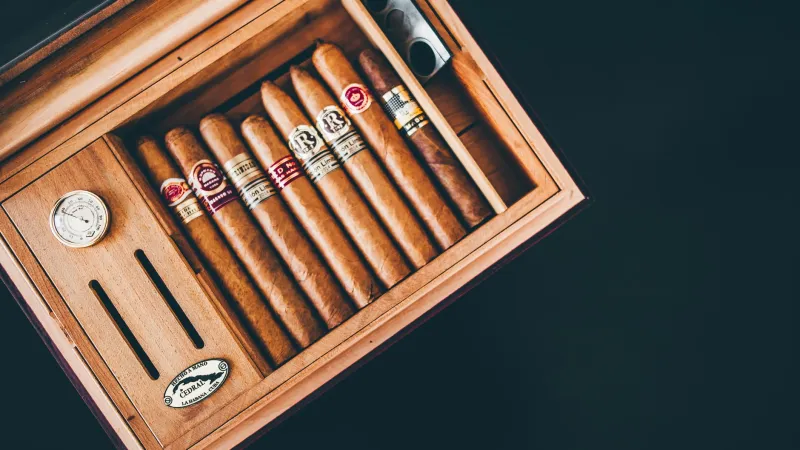
The box and banding: Legitimate premium cigars come in precisely manufactured boxes with tight tolerances, sharp printing, and consistent color. Counterfeit boxes frequently show fuzzy logo printing, slightly off color matching, misaligned text, or cheap cedar that feels thin and light. Bands on fake cigars often have subtle color shifts — a Cohiba's three gold bands, for example, should be a specific shade of matte gold, not shiny or brassy. Hold a band next to a known authentic example and the difference is often immediately visible.
The hologram and tax stamp: Most legitimate premium cigars sold in the US carry a factory seal or authenticity hologram. These holograms are difficult and expensive to replicate convincingly. Tilt the box — a real hologram shifts color and depth. A fake one looks flat, or the image doesn't shift cleanly. Similarly, counterfeit tax stamps (when present at all) often have incorrect serial number formatting or blurry microprinting.
The cigars themselves: Look at the cigars before you buy when possible. Legitimate premium cigars have consistent color within the box, minimal vein prominence on the wrapper, and no soft spots or canoeing. Fakes frequently show inconsistent color, rough seaming, or wrappers that look slightly too wet or too dry. The foot (the unlit end) should reveal a clean, even filler blend — not a mash of stems and scraps.
The price: This one seems obvious, but it catches people constantly. If someone is selling you a box of 25 Cohiba Behike 54s for $400, those are not real. The authentic retail value of that box exceeds $3,000. No legitimate seller is taking that kind of loss. Deals that seem too good to be true in the premium cigar world almost always are.
Where Fakes Are Most Likely to Find You
Online marketplaces are the highest-risk environment for counterfeit purchases. eBay, Facebook Marketplace, and various cigar-specific buy/sell groups on social media are loaded with listings that range from suspicious to outright fraudulent. Even dedicated cigar auction platforms aren't immune — fake boxes occasionally slip through.
Duty-free shops in international airports, particularly in Latin American and Caribbean transit hubs, are another high-risk zone. The "authentic Cuban" boxes sold in many of these shops are frequently fakes or heavily adulterated products that don't match what the brand actually produces.
Unfamiliar brick-and-mortar retailers — particularly tobacco shops in tourist areas, gas station-adjacent shops, and general import stores — should be approached with caution. A reputable tobacconist with an established reputation and an IPCPR membership has far more to lose from selling counterfeits than a pop-up shop in a strip mall.
Authentication Tools and Resources Serious Collectors Use
The most reliable protection is buying from authorized dealers. Every major premium cigar brand maintains a list of authorized US retailers on their website. If the shop you're buying from isn't on that list, proceed carefully.
For Cuban cigars specifically, Habanos S.A. (the Cuban state tobacco company) has developed a digital verification system called "Hcheck" that allows buyers to verify box codes via a mobile app. It's not foolproof — codes can be duplicated — but it adds a meaningful layer of verification.
Several collector communities, including forums on Cigar Federation and Reddit's r/cigars, maintain running threads on known counterfeit batches and how to identify them. These communities are invaluable because they're updated in near real-time as new fakes emerge in the market.
For high-value purchases — a rare vintage box, a limited release, anything above $500 — consider consulting a specialist authenticator. A handful of experienced dealers and auction house professionals offer authentication services for a fee, and for serious money, it's worth every dollar.
What to Do If You've Already Been Burned
If you suspect you've purchased counterfeit cigars, document everything: photos of the box, bands, tax stamps, and any communication with the seller. File a complaint with the FTC at ReportFraud.ftc.gov and report the seller to whatever platform facilitated the transaction. Credit card chargebacks are available in many cases if the purchase was recent.
More importantly, tell your community. The cigar collecting world is smaller and more connected than it looks. Sharing documentation of a fake — the seller's name, the platform, the specific details — protects other collectors and puts pressure on bad actors.
The Collector's Mindset
Counterfeiting is an arms race, and the fakes are getting better. But so is collector knowledge. The enthusiasts who get burned repeatedly are almost always the ones chasing deals that don't add up or buying from sources they haven't vetted.
Building a premium collection means building relationships — with trusted retailers, with fellow collectors, with the brands themselves. That network is your best authentication tool, and it's one no counterfeit operation can replicate.
Smoke premium. Buy smart. And never let a too-good-to-be-true price talk you out of doing your homework.