One Flame, Two Worlds: What Your Brain Is Really Doing When You Smoke Alone vs. With the Crew
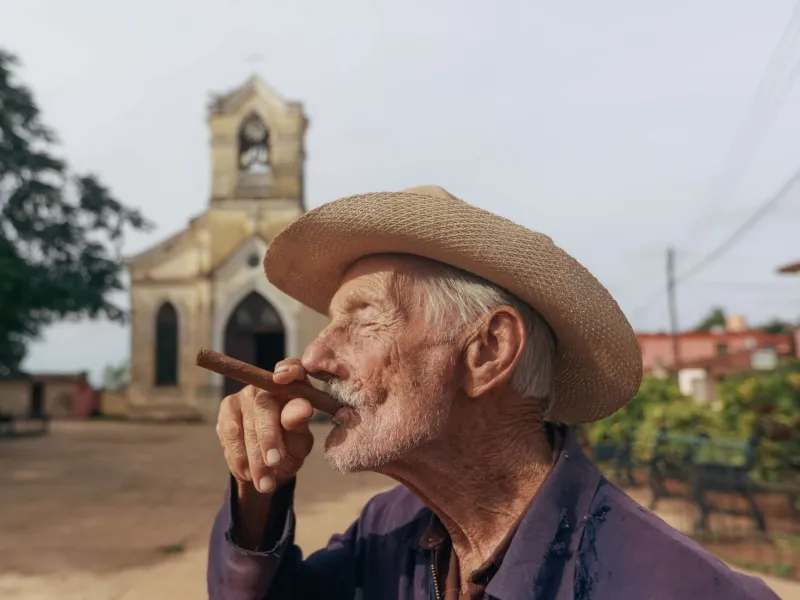
Ask any committed cigar enthusiast to describe their most memorable smoke, and you'll get two very different kinds of stories. One type involves a group — a porch full of friends, a lounge crawling with good energy, a celebration that stretched three hours past when anyone planned to leave. The other kind is quieter. A solo evening. A good chair. No agenda. Both are real. Both hit different. And there's a fascinating reason why.
The psychological and sensory experience of smoking a premium cigar shifts more dramatically based on social context than most enthusiasts realize. It's not just about who's in the room — it's about what your nervous system is doing, how your attention is allocated, and what your brain decides to prioritize when the ritual begins.
The Neuroscience of Tasting Alone
Here's something that might surprise you: you probably taste more when you're smoking by yourself.
Flavor perception is heavily tied to attention, and attention is a finite resource. When you're engaged in conversation, tracking the thread of a story, laughing at something someone just said, or waiting for your turn to speak, your cognitive bandwidth is occupied. Your brain is multitasking — and taste processing, which requires active focus to fully decode, gets deprioritized.
This isn't a flaw in the social smoking experience. It's just neuroscience. Research on sensory attention consistently shows that when visual and auditory processing demands increase, olfactory and gustatory processing (smell and taste) take a backseat. The technical term is "attentional competition" — your senses are literally competing for cognitive resources, and the social senses tend to win.
For cigar enthusiasts, this means a solo session with a complex, nuanced stick — something like an Arturo Fuente Opus X or a Liga Privada No. 9 — is often the better context for truly appreciating the full flavor profile. The leather, the cedar, the pepper in the retrohale, the way the profile evolves from the first third to the final inch. You're more likely to notice all of it when you're not also tracking three conversations.
What Social Smoking Actually Does for You
If solo sessions are where you taste more, why do group smokes feel so good? Because flavor isn't the only thing happening.
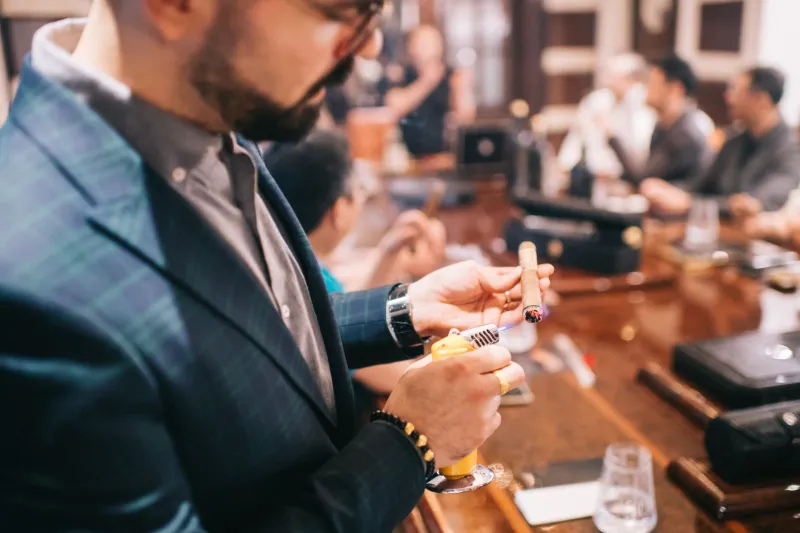
Shared rituals trigger a cascade of neurochemical activity that solo experiences simply can't replicate at the same intensity. When you're smoking with your crew, you're getting dopamine hits from social bonding, oxytocin from shared experience, and a kind of low-grade euphoria that comes from being embedded in a group doing something enjoyable together. The cigar becomes a social technology — a reason to be present, a shared object of attention, a ritual that slows everyone down to the same pace.
Cigar sommeliers and lounge professionals who work with customers regularly note that first-time smokers almost always have a better subjective experience in social settings, even if their technical appreciation of the cigar is lower. The social context carries the experience. The warmth of the room, the laughter, the sense of occasion — all of it amplifies enjoyment in ways that have nothing to do with the tobacco itself.
This is also why your gateway cigar probably happened in a group. Someone handed you something, the moment was right, and the social signal — "this is worth doing" — was already in place before you ever took a draw.
Accountability and the Smoke You Actually Finish
Here's a wrinkle that experienced collectors will recognize immediately: you're more likely to smoke a cigar all the way through in a social setting than alone.
Solo sessions have a dropout problem. You light up, you're enjoying it, and then the phone buzzes or you lose focus or the evening just drifts and you set it down. The cigar goes out. You meant to relight it. You didn't. Social smoking has built-in accountability — everyone else is still going, the conversation is still flowing, and putting down your cigar feels like opting out of the moment. You stay in it.
This matters more than it sounds for premium sticks that reveal their best character in the final third. If you're consistently abandoning solo smokes before the finish, you may be missing the best part of some very expensive cigars.
One practical fix: solo sessions work better with a deliberate ritual attached to them. A specific chair. A specific drink. No phone. Treating it like an appointment rather than an afterthought dramatically increases the likelihood that you'll stay present and smoke through to the end.
The Conversation Effect on Flavor Memory
There's another dimension to social smoking that's worth understanding: shared language shapes how you remember flavor.
When you smoke with experienced enthusiasts who are actively discussing what they're tasting — "I'm getting dark chocolate on the draw, maybe some dried fruit" — you're not just hearing their opinions. You're priming your own perception. This is called "linguistic flavor priming," and it's well-documented in sensory research. When someone names a flavor before you consciously identify it, your brain is more likely to find it.
This is why smoking with knowledgeable people makes you a better taster over time. The vocabulary your crew uses becomes your vocabulary. The flavor categories they notice become categories you notice. Social smoking, in this sense, is also an education.
Cigar lounge regulars who've been smoking with the same group for years often describe a shared sensory language that makes their sessions richer than anything they'd develop alone. They've essentially trained each other.
Optimizing Both Experiences
The goal isn't to pick a side. It's to be intentional about which experience you're after.
For solo sessions: Choose complex, nuanced cigars that reward close attention. Eliminate distractions. Have a drink you enjoy but that won't compete with the flavor profile. Give yourself 90 minutes minimum. Treat it like meditation with a good stick.
For social smokes: Don't overthink the cigar choice. Something approachable and consistent — a Montecristo White, a Perdomo 10th Anniversary, a Rocky Patel Vintage — serves a group better than something that demands careful attention to appreciate. The cigar is the anchor for the experience, not the centerpiece.
Knowing what your brain is doing in both contexts isn't just interesting — it's genuinely useful. The best cigar life isn't one or the other. It's both, done with intention.