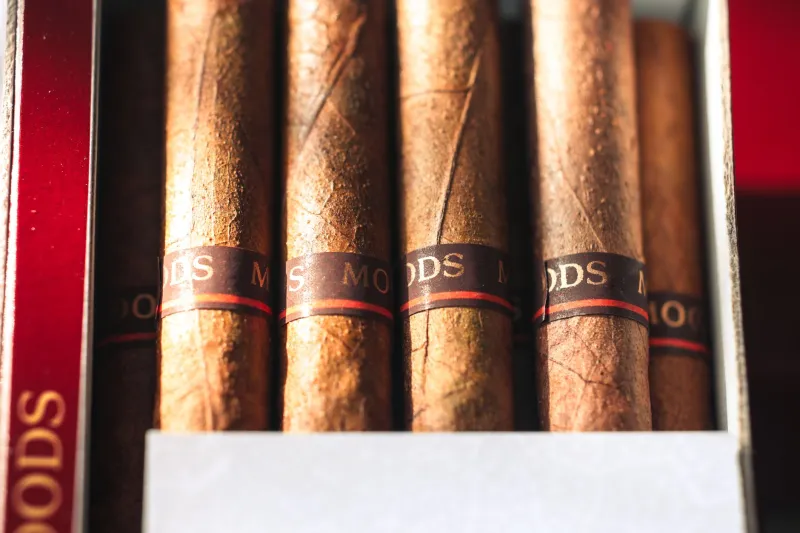
When Premium Sticks Become Legal Tender: Protecting Your Cigar Collection in a Divorce

You spent years building it. Hunting down limited releases at trade shows, sweet-talking your local tobacconist into reserving allocations, aging rare Cubans in a climate-controlled room that your spouse politely called "the smoke closet." Your collection is a labor of love — and in the eyes of family law, it may also be a marital asset worth fighting over.
It sounds absurd until it isn't. As premium cigar collecting has matured into a legitimate investment hobby, the financial stakes have climbed right alongside the hobby's reputation. We're talking collections that can run from a few thousand dollars to well into six figures for serious enthusiasts. When a marriage dissolves, those sticks don't just disappear into the night.
How the Law Actually Sees Your Humidor
Here's the uncomfortable truth: courts don't care that a particular box of Fuente Fuente OpusX has sentimental value or that you waited two years on a waiting list for it. What they care about is valuation — and that's where things get complicated fast.
In most U.S. states, property acquired during a marriage is considered marital property, subject to equitable distribution. That means your collection — unless you purchased significant portions of it before the marriage or received specific cigars as gifts — is likely on the table. Community property states like California, Texas, and Arizona are even more straightforward: marital assets are split 50/50, full stop.
The real headache isn't the legal principle. It's the valuation. Unlike a brokerage account or a piece of real estate, a cigar collection doesn't come with a clean market price. Secondary market values fluctuate. Condition matters enormously. Provenance — documentation that a cigar has been stored properly since purchase — can make or break a valuation argument.
The Appraisal Problem Nobody Talks About
When a divorce attorney asks for documentation of your collection's worth, you can't just hand over a stack of old receipts and call it a day. A box of aged Cohiba Behikes you paid $600 for five years ago might now be worth two or three times that on the secondary market — or less, depending on condition and demand.
Formal cigar appraisals are a niche service, but they do exist. A handful of specialists operate in major markets like Miami, New York, and Las Vegas who can assess collections for insurance and legal purposes. Some high-end auction houses that handle rare tobacco — think Nat Sherman-era pieces or pre-embargo Cubans — also offer documentation services.
If you're building a serious collection right now, the smartest move is to start cataloging today, regardless of your relationship status. Photograph every significant purchase. Keep digital receipts. Note storage conditions, acquisition dates, and any provenance documentation that came with the cigars. This isn't pessimism — it's the same discipline a serious wine collector or whiskey investor would apply.
Real Talk: Stories from the Community
Enthusiasts who've been through this situation are understandably private, but the stories do surface in forums and lounge conversations. One collector in the Southeast described watching his attorney and his ex-wife's attorney argue over a spreadsheet of his collection for nearly two hours during mediation. "They had no idea what any of it was," he recalled. "My lawyer kept mispronouncing 'Arturo Fuente.' It was painful."
He ended up retaining the collection but had to offset its assessed value against other shared assets — essentially buying out his ex-wife's share with equity from elsewhere in the settlement.
Another collector in Texas had a different experience. Because he'd begun assembling his collection before the marriage and had meticulous records proving it, a significant portion was classified as separate property. The lesson there is stark: documentation isn't just good practice, it's legal armor.
Insurance: The Gap Most Collectors Don't Know They Have
Before we even get to divorce court, there's a more immediate vulnerability most collectors are ignoring — and that's insurance coverage.
Standard homeowner's and renter's insurance policies are notoriously inadequate for specialty collections. Most policies either exclude tobacco products entirely or cap coverage at amounts that wouldn't cover a single box of sought-after limited releases. If your humidor burns in a house fire or your walk-in climate room fails overnight, you could be looking at a total loss with no meaningful payout.
The solution is a scheduled personal property rider — sometimes called a floater — that specifically lists your collection and its appraised value. Insurers like Chubb, AIG Private Client, and PURE specialize in high-net-worth coverage that can accommodate unusual collections. Expect to provide documentation, photographs, and potentially a third-party appraisal to get proper coverage in place.
This matters in a divorce context too. If your collection is properly insured with documented replacement values, you've already done half the work an attorney would need to argue for an accurate valuation in court.
Prenups, Postnups, and the Conversation Nobody Wants to Have
Look, this isn't a fun topic. But if you're sitting on a collection worth $20,000, $50,000, or more, a conversation with a family law attorney about protective options isn't paranoid — it's responsible.
A prenuptial agreement can explicitly classify your existing collection as separate property and establish rules for how future acquisitions are categorized. A postnuptial agreement can accomplish similar goals for couples who are already married. Neither document requires you to be pessimistic about your relationship; plenty of couples treat them as straightforward financial planning tools, no different from updating a will.
At minimum, keeping a dedicated account or credit card for collection purchases — separate from joint finances — creates a paper trail that can help establish the separate nature of specific acquisitions down the road.
The Bottom Line for Serious Collectors
Premium cigars have earned their place in the world of legitimate collectibles. The secondary market is real, the values are real, and the legal exposure is real. Building a collection without thinking about documentation and protection is like aging a rare Nicaraguan puro in a cardboard box — you're undermining the very investment you've worked so hard to build.
Get your collection cataloged. Talk to an insurance specialist. If your situation warrants it, have a frank conversation with a family law attorney before you ever need one. The lounge is supposed to be a place of pleasure and relaxation — a little planning now means you can keep it that way, no matter what life throws at you.
Smoke boldly. But protect what you've built.